
In the 911 dispatcher study described in the research, what happened after six weeks of weekly redemption-story emails?
Select one answer.
Why burnout needs a narrative response, not just another wellness perk
Burnout is often framed as an individual stress problem to be solved with self-care. But the conditions that create it — unclear expectations, chronic overload, poor communication, and cultures that reward exhaustion — are collective. Leaders shape those conditions through the expectations they set, the clarity they provide, the recognition they offer, and the psychological safety they create (Stress & Resilience Institute).
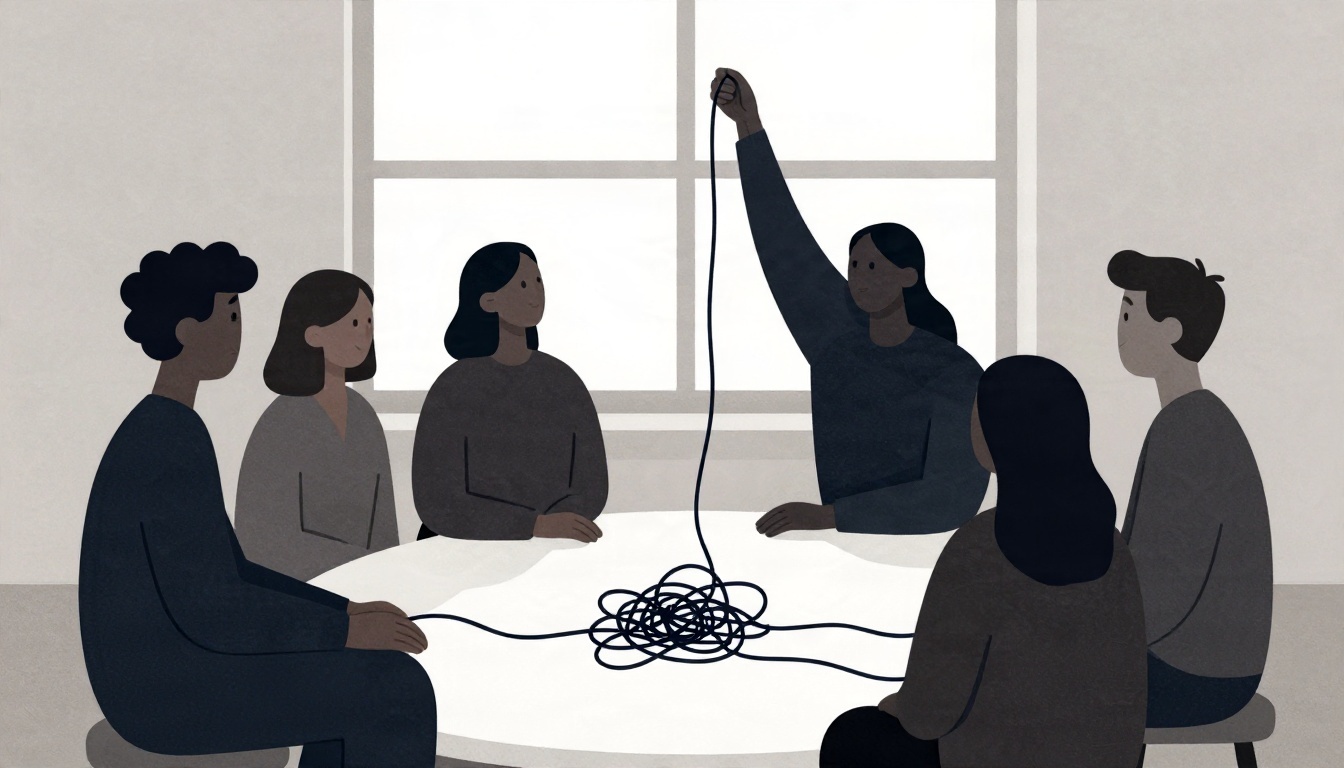
That is why storytelling belongs in your burnout response. Stories help teams make sense of change, connect to goals and values, and feel inspired to act; they create a shared narrative that fosters identity and belonging (HRZone). When people share real experiences, they build the trust and empathy that analytical metrics alone cannot produce.
What the evidence says about storytelling and burnout
Peer-based storytelling is used to reduce stigma, build connection, and improve workplace mental health and help-seeking (Behavioral Health News). Empathy, which storytelling helps build, can improve personal well-being and reduce burnout at work (Great Place To Work).
A widely cited example: after researchers sent weekly emails containing redemption stories to 911 dispatchers across nine U.S. cities, turnover fell by 50% and burnout markedly decreased within six weeks, according to a practitioner summary of the study (LinkedIn). The mechanism is not magic — it is repeated exposure to meaningful stories that reinforce belonging and resilience.
A practical narrative protocol for burned-out teams
Use this as a four-week cycle. Keep sessions to 30–45 minutes and protect them on the calendar.
Week 1: Name the story
- Ask each person to complete: "The story I've been telling myself about work lately is..."
- Capture themes on a shared board without attributing them.
- Identify the dominant narrative (e.g., "nothing we do matters" or "we are always behind").
Week 2: Externalize the problem
- Separate the problem from the people: "The overload is the problem, not the team."
- Ask: what conditions keep this story alive? List concrete work-design factors.
- Choose one factor the team can influence this month.
Week 3: Collect counter-stories
- Invite each person to share a small moment when work felt meaningful or manageable.
- Record these as team artifacts — a shared document, a wall, a recurring slide.
- Use them to challenge the dominant narrative with evidence from lived experience.
Week 4: Author the next chapter
- Draft a short team narrative: where we were, what we learned, where we are going.
- Assign one owner and one review date.
- Repeat the cycle quarterly, not once.
Checklist for leaders
- Start meetings with a brief story of a recent win, challenge, or surprise.
- Regularly highlight individual and team stories that show impact.
- Invite team members to retell and amplify each other's achievements.
- Model vulnerability by sharing your own "why" and your own limits.
- Pair every story session with one concrete work-design change.
Common mistakes to avoid
- Turning stories into performance theatre. Forced positivity backfires; allow honest accounts of difficulty.
- Storytelling without structural change. Stories build meaning, but they cannot compensate for chronic overload.
- One-off events. The dispatcher example worked because the intervention was repeated weekly, not delivered once.
Quick quiz
Test your understanding before you run your first session.
{"question":"In the 911 dispatcher study described in the research, what happened after six weeks of weekly redemption-story emails?","options":["Turnover fell by 50% and burnout markedly decreased","Turnover rose by 50% but morale improved","Burnout stayed the same while turnover doubled"],"correctIndex":0}
How the Featured Expert Can Help
Ferran Salgado Serrano is a writer and consultant who blends literary work with organizational consulting, offering narrative exploration and facilitation of team processes. His dual practice is suited to teams that want to integrate creative thinking into their dynamics and work through narrative rather than generic workshops. You can explore his literary projects and professional services at ferransalgado.com.