
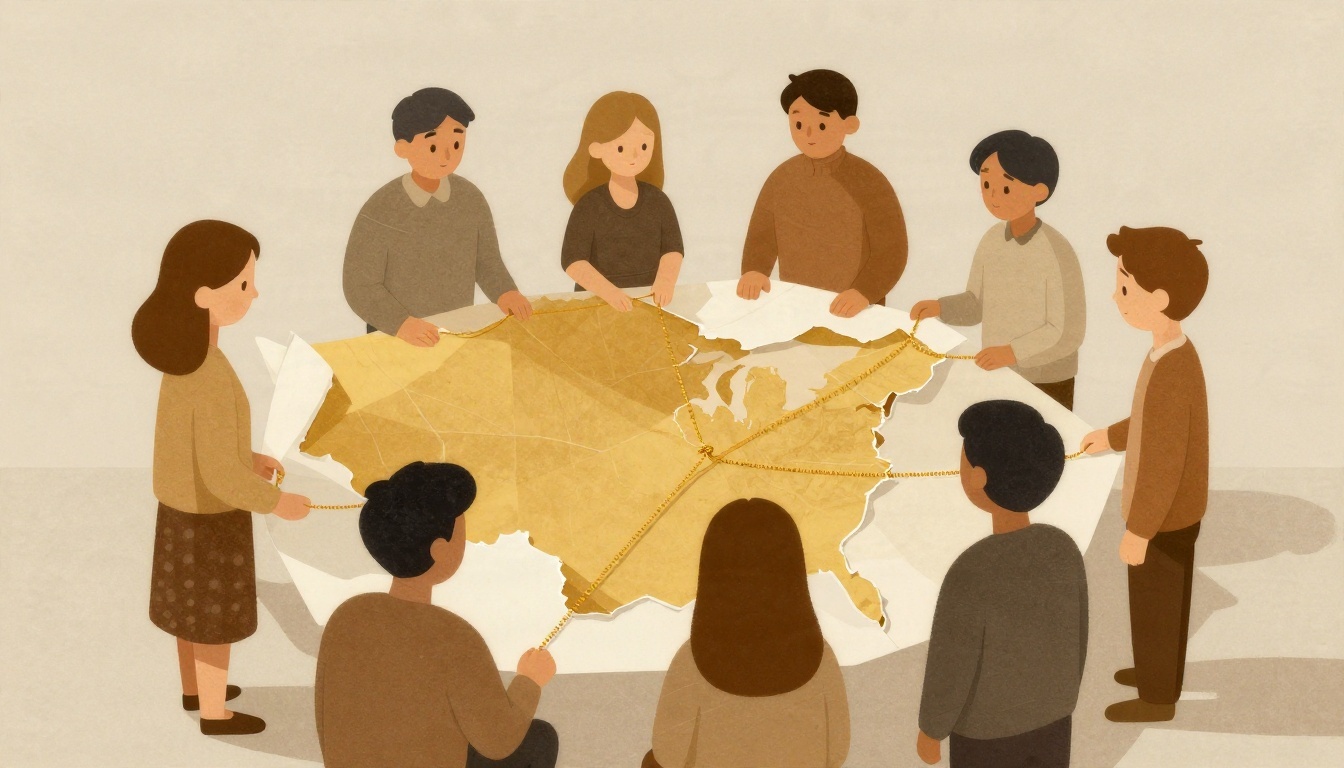
When a project fails, the facts are rarely the problem. The problem is the story the team starts telling itself: that leadership doesn't listen, that risk isn't safe, that speaking up gets you blamed. That story spreads quietly and hardens into distrust. Rebuilding trust means replacing it deliberately, with a narrative the whole team helps write.
Narrative repair is not spin. It is a structured way to acknowledge what happened, explain why, and show what changes. The steps below turn that into something you can run in a single session and sustain over the following weeks.
According to research on organizational trust, what happens when an organization denies or covers up a trust failure?
Select one answer.
Start by naming the failure clearly
The most common mistake after a failure is avoidance. Research on organizational trust at the University of Queensland found that denying or covering up a trust failure is effectively a second violation that undermines trust further and makes recovery harder (UQ Business School).
So the first narrative move is precision. Replace vague framing ("some headwinds," "timing issues") with a plain statement of what happened and what it cost. David Burkus's guidance on bouncing back from failure puts owning it clearly as step one, before any conversation with the team (David Burkus).
A useful test: if a new team member read your account, would they understand what actually went wrong without asking follow-up questions?
Separate the people from the outcome
Teams often absorb a failed project as evidence of their own inadequacy. A narrative that conflates the two makes recovery harder. When leadership owns the gap, it protects the team's sense of competence and signals that the failure was systemic, not personal.
This matters because the story people tell about a setback shapes how they respond to the next one. Reframing negative events as temporary setbacks rather than permanent failures is associated with greater resilience and motivation (Human Capital Innovations).
Run a narrative repair session
Set aside 60 to 90 minutes with the whole team. The goal is a shared account, not a verdict.
- Name it. State the failure in one sentence, without blame language. Write it where everyone can see it.
- Map the story. Ask: what story is the team currently telling about this? Capture it honestly, including the cynical version.
- Find the turning point. Identify the moment the outcome became clear and what was known before it. This is where learning lives.
- Write the correction. Agree on what changes, who owns each change, and how the team will know it worked.
- Close the loop. Decide when you will revisit the story and report back on progress.
Keep the output to one page. A narrative nobody can repeat is not yet a shared narrative.
Make the apology part of the story, not a substitute for it
A sincere apology matters, but it is a scene, not the whole plot. The CMA Consult summary of trust-rebuilding steps places apology after owning the failure and understanding its consequences, and before outlining corrective action (CMA Consult).
Avoid excuses and justification in the apology itself. Save the explanation of causes for the correction section, where it serves learning rather than defense.
Build rituals that keep the story alive
Trust returns through repetition, not one speech. Consider a short recurring practice: a monthly review where one mistake is examined for what it taught, or a standing item in team meetings where anyone can surface a near-miss without penalty.
These rituals work because they make the new story testable. Each time someone raises a problem and is met with curiosity rather than blame, the narrative gains evidence.
A quick checklist before you start
- The failure is described in plain language, with no euphemisms.
- Leadership has owned the gap before asking the team to move on.
- The team has had a chance to say what the failure meant to them.
- Corrective actions have named owners and dates.
- There is a scheduled moment to revisit and update the story.
Test your understanding
Before you run the session, check that you have the sequence right. The order of the narrative matters as much as its content.
{"quiz":{"question":"According to research on organizational trust, what happens when an organization denies or covers up a trust failure?","options":["It is treated as a second violation that makes recovery harder","It speeds recovery by avoiding unnecessary conflict","It has no measurable effect on trust levels"],"correctIndex":0}}
How the Featured Expert Can Help
Ferran Salgado Serrano is a writer and consultant who blends literary work with organizational consulting, offering narrative exploration and facilitation of team processes. His practice is suited to teams that want to integrate creative thinking into how they work through difficult moments. You can learn more at ferransalgado.com.