
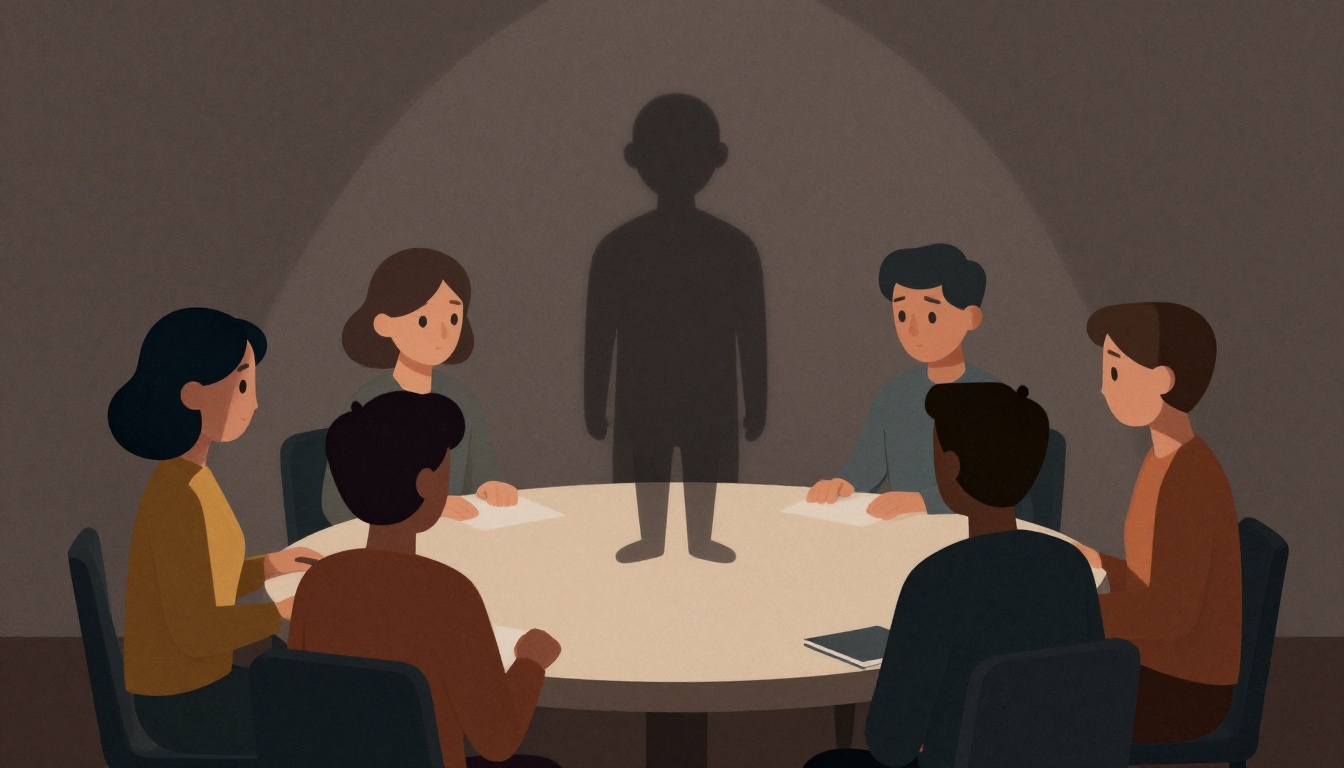
When your team pushes back on a new initiative, the usual response is to label them "resistant" and double down on persuasion. But resistance to change is rarely irrational — it usually comes from a perspective that makes perfect sense to the person holding it. A more effective approach is to treat resistance not as a problem to crush, but as a character in your team's story. By crafting a team antagonist for change, you give that resistance a name, a face, and a voice — and you make it something your team can collectively examine, challenge, and ultimately transform.
What is a key benefit of personifying resistance to change as a team antagonist?
Select one answer.
Why personify resistance?
Personification is a narrative technique that attributes human traits to non-human subjects, making abstract forces palpable and emotionally immediate. In literature, it turns the wind into a "screaming" force or a house into a "frowning" presence. In organizational change, it does the same for the vague anxiety that accompanies new processes. Instead of saying "people are resisting," you say "the Guardian of the Old Way is worried about losing status." That shift is powerful: it separates the person from the problem, and it invites curiosity rather than defensiveness.
Research shows that stories are remembered 22 times more than facts alone, and only 34% of change initiatives succeed — often because of poor communication. A strong change narrative creates a shared understanding of the past, an explanation for the change planned today, and a projection for the future. Personifying resistance fits squarely into that narrative: it gives the team a common language to talk about what's blocking them.
How to build your team antagonist
Start by identifying the specific fears and concerns that are fueling resistance. Common sources include loss of status or job security, fear of incompetence in new processes, and poorly aligned reward systems. Once you know what the resistance is protecting, you can shape it into a character.
Here's a practical checklist:
- Name the antagonist. Give it a memorable name that reflects its function, like "Captain Caution" or "The Status Quo Sentinel." Avoid names that blame individuals.
- Give it a backstory. What past experience or organizational history is driving its behavior? Maybe a previous change failed, and it learned to be wary.
- Describe its tactics. Does it whisper doubts in meetings? Does it slow down approvals? Does it point out every risk? Naming the tactics makes them visible.
- Give it a legitimate concern. Every antagonist believes it's protecting something valuable. What is that? Loss of control? Competency? Identity?
- Write a short scene. In a team meeting, describe a situation where the antagonist shows up. For example: "When we announced the new CRM, the Guardian of the Old Way reminded everyone how long it took to learn the last system."
Use the antagonist in your change narrative
Once you have your antagonist, integrate it into your change story. Use the ABT framework — And, But, Therefore — to structure your message. For example: "We have a strong track record (And), but the market is shifting and our current process can't keep up (But), therefore we need to adopt a new approach, and we'll need to help the Guardian of the Old Way see that its caution is still valued."
This approach aligns with the insight that people do not resist change they believe is in their best interests. By giving the antagonist a voice, you acknowledge that its concerns are real. Then you can address them directly: What will stay the same? What training will be provided? How will status be preserved or redefined?
Turn the antagonist into an ally
A well-crafted antagonist isn't just a villain to defeat — it's a character that can evolve. In your narrative, show how the antagonist's caution becomes a useful check on reckless speed, or how its knowledge of the old system helps train others. This mirrors the practice of appointing historical resistors to lead aspects of the change project — a technique that turns skeptics into change agents.
To do this, schedule a team workshop where you collectively write the antagonist's transformation arc. Ask: "What would need to happen for the Guardian of the Old Way to become a supporter?" Then build those conditions into your change plan.
A final note on language
The label "change resistance" itself can be counterproductive. It draws from linear change models that assume a burning platform and a clear vision are enough. But real change is messier. By reframing resistance as a character in a story, you move from a language of compliance to a language of understanding. You invite your team to be co-authors of the change, not just recipients of it.
How the Featured Expert Can Help
Ferran Salgado Serrano is a writer and consultant who blends literary work with organizational consulting, offering narrative exploration and facilitation of team processes. His dual practice helps teams integrate creative thinking into their dynamics — exactly what you need when crafting a team antagonist for change. Visit Inicio to explore his literary projects and professional services.
Quiz
Question: What is a key benefit of personifying resistance to change as a team antagonist?
- It separates the person from the problem and invites curiosity.
- It eliminates the need for training and support.
- It guarantees that all change initiatives will succeed.
Correct Answer: It separates the person from the problem and invites curiosity.